Charting Currency Gateway Innovations That Streamline Cross-Platform Access in Regulated Live Dealer Environments
Bianca Fischer · Jul 20, 2026

Charting Currency Gateway Innovations That Streamline Cross-Platform Access in Regulated Live Dealer Environments
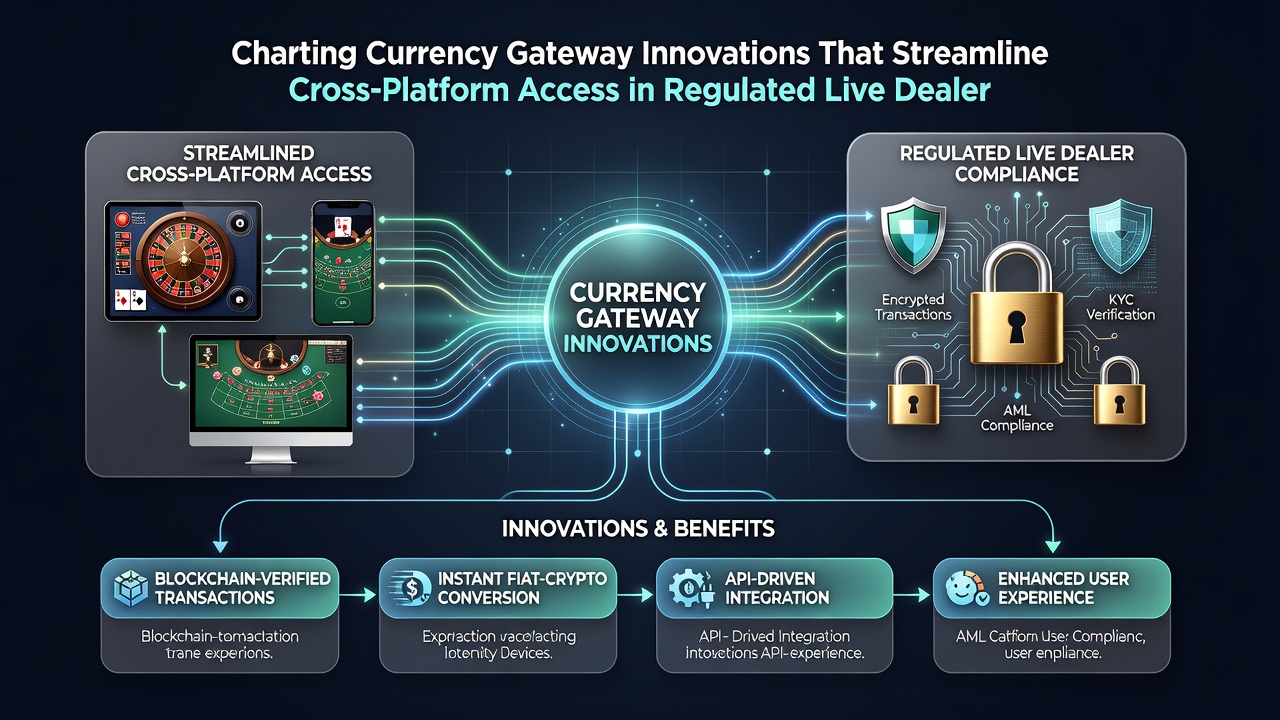
Regulated live dealer environments have seen steady adoption of advanced currency gateways that connect multiple platforms while meeting compliance standards across jurisdictions, and these systems allow players to move between mobile apps and desktop interfaces without interrupting ongoing table sessions or financial transactions.
Developers have built these gateways around modular APIs that handle both traditional fiat currencies and emerging digital assets, which means operators can maintain separate ledgers for each region yet consolidate player balances in a single secure profile that updates across devices in real time.
Core Technologies Driving Seamless Access
Modern gateways rely on encrypted tokenization layers that convert player deposits into platform-specific credits almost instantly, while back-end reconciliation engines match every transaction against regulatory reporting requirements from bodies such as the New Jersey Division of Gaming Enforcement and the Malta Gaming Authority. These engines also log session data so that live dealer streams remain synchronized regardless of whether a participant switches from a smartphone to a tablet mid-hand.
Biometric authentication modules have become standard in many deployments because they reduce login friction across devices without compromising identity verification protocols required by licensing authorities.
Regulatory Frameworks Shaping Implementation
Operators working in multiple markets must align gateway features with varying rules on transaction reporting and anti-money laundering checks, yet recent updates in several U.S. states and European member countries have introduced standardized data formats that simplify cross-border compliance. In July 2026 several jurisdictions began piloting unified reporting dashboards that pull directly from gateway APIs, cutting administrative overhead for companies licensed in more than one territory.
Payment service providers have responded by embedding geofencing capabilities that automatically adjust available currencies and withdrawal limits based on a player’s detected location, which keeps operations inside approved regulatory boundaries at all times.
Cross-Platform Performance Metrics
Industry reports indicate that platforms utilizing integrated gateways experience average session continuity rates above 92 percent when players change devices, and latency measurements from live dealer tables show no measurable increase during currency conversions. These figures come from aggregated operator data shared through trade associations that track technical performance across North American and Asia-Pacific markets.
Researchers at academic institutions studying digital payment flows in gaming have noted that token-based settlement reduces chargeback incidents because disputes can be resolved against immutable transaction records rather than traditional bank statements.
Examples from Operational Markets
One European operator expanded its live roulette and blackjack offerings to include instant multi-currency support across five languages and three device types after deploying a gateway certified by the Alderney Gambling Control Commission. Players in that network can now fund accounts with local bank transfers or approved stablecoins and switch to a different platform mid-session while the dealer continues without pause.
Similar rollouts have occurred in Canadian provinces where provincial regulators require real-time visibility into player funds, and gateway vendors have supplied dashboards that feed directly into government oversight portals.
Future Integration Pathways
Developers continue testing quantum-resistant encryption methods for the settlement layer because regulatory forecasts suggest stricter data-protection standards will take effect within the next licensing cycle. At the same time, partnerships between gateway providers and live-streaming technology firms aim to embed payment options directly into augmented-reality dealer interfaces, which would further reduce the steps required to place bets across any connected device.
These advancements remain subject to ongoing approval processes from regional authorities, yet the underlying architecture already supports the interoperability demanded by today’s multi-platform player base.
Conclusion
Currency gateway systems have become central infrastructure for regulated live dealer operations that span devices and jurisdictions, and their continued refinement supports both compliance and operational continuity. Data from licensing bodies and industry groups show measurable gains in transaction speed and session retention when these gateways are properly implemented, while ongoing technical and regulatory developments point toward even tighter integration in coming years.