Currency Swings Reshaping Reward Mechanisms Across Global Mobile Gaming Platforms
Hugo Schmitt · Aug 5, 2026

Currency Swings Reshaping Reward Mechanisms Across Global Mobile Gaming Platforms
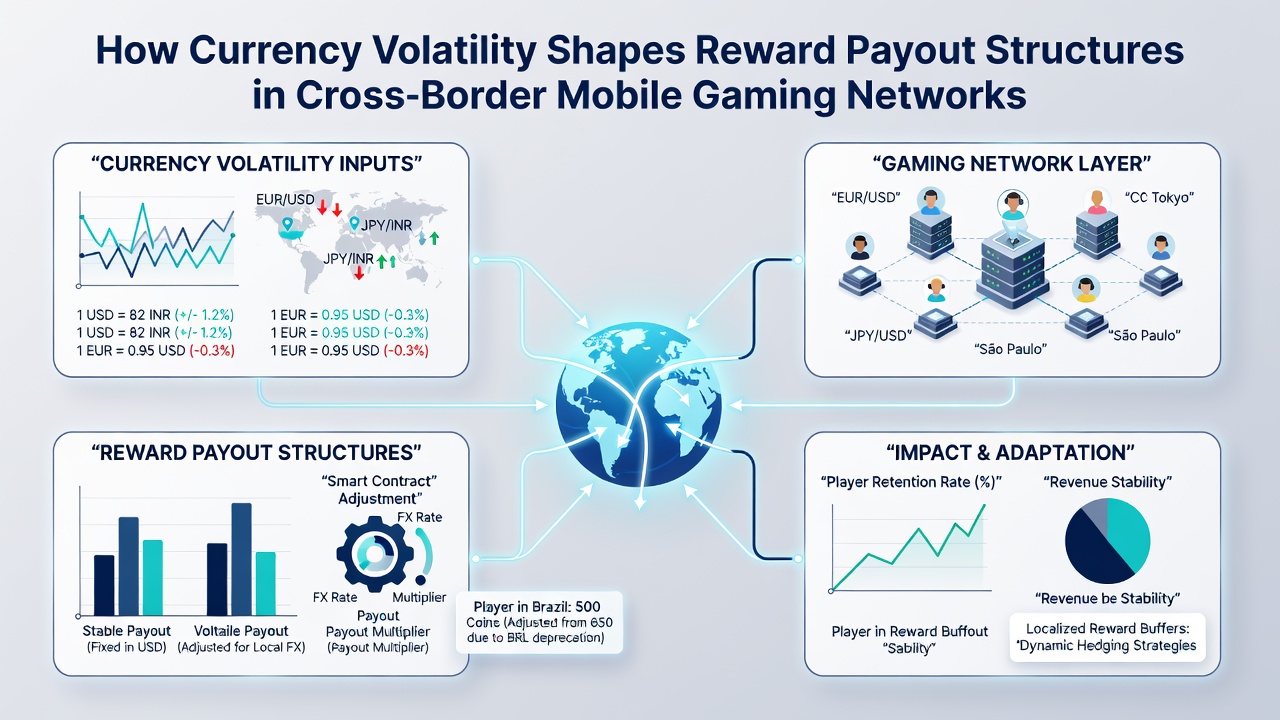
Exchange rate movements create direct pressure on how operators structure rewards in cross-border mobile gaming networks, where players from different jurisdictions access the same platforms yet receive payouts in local currencies. Data from industry monitoring services shows operators must recalibrate bonus values, loyalty tiers, and prize pools whenever major currency pairs move beyond certain thresholds, and these adjustments occur more frequently as digital wallets and instant transfer options expand participation across borders.
Core Drivers Behind Volatility Effects
Fluctuations in pairs such as USD/EUR, USD/CNY, and USD/BRL alter the real value of fixed reward amounts the moment conversion happens at payout, which forces platforms to embed dynamic multipliers or regional caps that activate automatically. Researchers tracking transaction logs across major networks report that volatility spikes lasting more than 48 hours trigger internal hedging protocols, while shorter movements often get absorbed through reserve buffers operators maintain for high-volume markets. Those buffers, built from revenue pools denominated in stable currencies, allow temporary smoothing yet still require eventual recalibration once cumulative shifts exceed preset limits.
Adjustment Techniques Operators Deploy
Platforms integrate real-time forex feeds into their reward engines so that bonus percentages displayed to players update within minutes of market moves, a practice documented in technical white papers from software providers serving multiple continents. Some networks apply tiered payout schedules that scale rewards according to the player's registered currency strength against a basket of reference currencies, whereas others lock reward values at the moment of earning and convert only at withdrawal using the prevailing mid-market rate. Both approaches appear in documented case studies covering networks active in Latin America and Southeast Asia, where daily swings routinely exceed two percent.
Automated hedging through forward contracts and options further influences structure design because the cost of these instruments gets factored into overall reward budgets, reducing the percentage allocated to player-facing bonuses during periods of elevated volatility. Observers note that networks maintaining larger derivative positions can sustain more generous static reward tables, while smaller operators shift toward conditional bonuses that activate only when exchange rates remain within defined bands.
Regional Regulatory Responses Observed Through Mid-2026
By August 2026, regulatory filings from several jurisdictions reveal requirements for operators to disclose volatility-linked payout formulas to players at the point of deposit, a measure introduced after complaints about unexpected reductions in local-currency rewards. Canadian provincial regulators, for instance, now request quarterly reports detailing how exchange adjustments affect prize pools offered to residents, while Australian oversight bodies have incorporated similar disclosure rules into their digital platform licensing framework. These requirements have prompted software updates that generate jurisdiction-specific reward previews before players commit funds.
European data protection authorities have examined how volatility algorithms process player location data, confirming that many networks already segment reward offers by IP-derived currency zones yet must still comply with transparency standards. In parallel, industry associations in Latin America have published guidelines encouraging operators to publish historical volatility impact summaries so players understand why reward values fluctuate even when game outcomes remain constant.
Technology and Data Infrastructure Supporting Changes
Cloud-based payment processors now expose APIs that return converted reward values alongside live exchange rates, allowing game clients to display accurate figures without server round-trips that could delay play sessions. Machine learning models trained on historical forex and player withdrawal patterns help predict periods when large-scale adjustments will be necessary, enabling preemptive reserve reallocations. One documented implementation at a multi-jurisdiction network reduced manual intervention in payout recalibrations by 67 percent after the models went live in early 2025.
Blockchain-based stablecoin options have emerged as an alternative layer for certain high-volatility corridors, with some networks offering players the choice to receive rewards in tokenized assets pegged to major currencies rather than undergoing repeated fiat conversions. Adoption rates remain modest outside specific corridors yet show measurable uptake in regions where local banking rails introduce additional friction and fee layers during conversion.
Future Trajectory Based on Current Trends
Projections derived from transaction volume data indicate continued growth in cross-border participation through 2027, which will intensify the need for more granular volatility controls embedded directly in game logic rather than handled solely at the payment layer. Partnerships between gaming platforms and specialized fintech providers are expanding to include predictive analytics dashboards that surface expected reward adjustments days in advance, giving both operators and players clearer visibility into upcoming changes. These developments follow patterns already visible in other digital service sectors where multi-currency settlement occurs at scale.
Conclusion
Currency volatility has become a structural variable that mobile gaming networks must manage through a combination of algorithmic adjustments, regulatory compliance measures, and infrastructure investments. The approaches documented across different regions demonstrate that operators balance player expectations for predictable rewards against the financial realities of operating in fluctuating forex environments, with outcomes shaped by the specific mix of markets served and the technical tools deployed. As participation continues to cross more borders, the integration of real-time data and hedging strategies will determine how reward structures evolve to maintain consistency across currency zones.