Inside teh Mechanics: How Design Elements Influence Player Behavior in Digital Slot Environments
Bianca Fischer · Jul 27, 2026

Inside teh Mechanics: How Design Elements Influence Player Behavior in Digital Slot Environments
Digital slot environments rely on carefully engineered design elements that shape how players interact with games, from the moment they load a title until they decide to stop, and these components draw on principles tested across global markets where operators track engagement metrics in real time.
Visual Composition and Color Dynamics
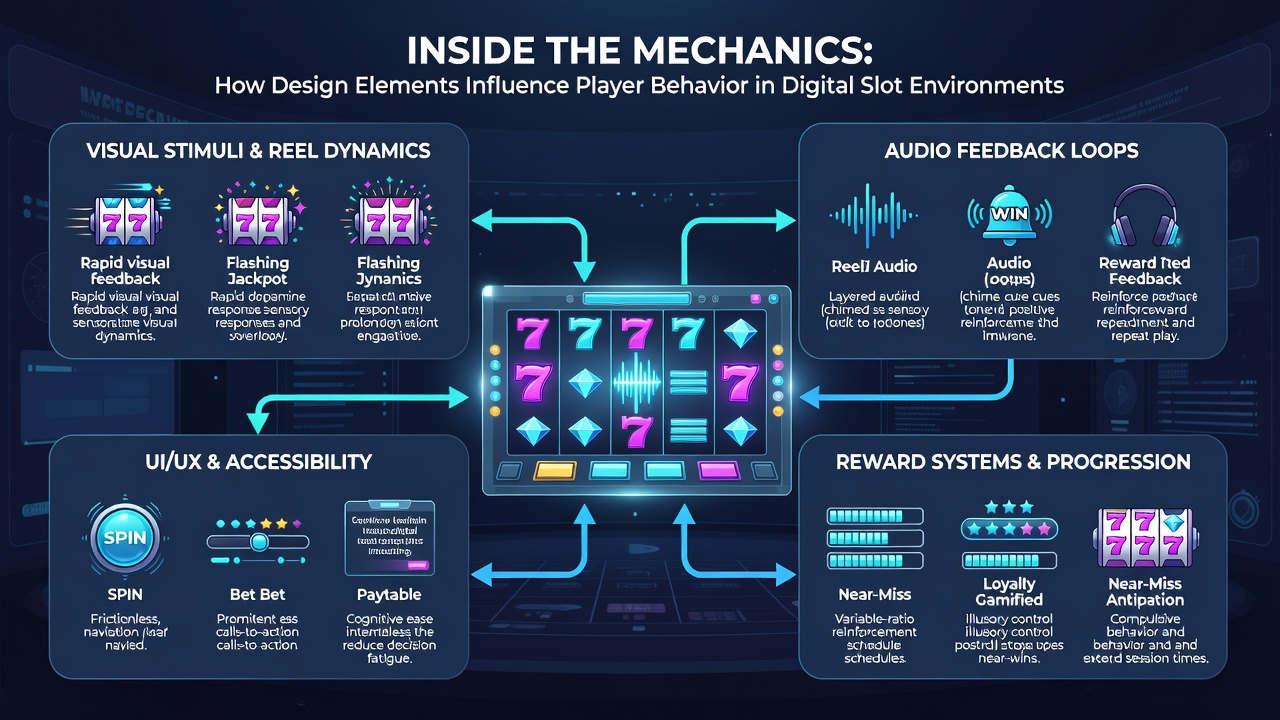
Game developers select color palettes and symbol arrangements that guide eye movement across the screen, with bright primary tones often positioned to highlight potential winning combinations while darker backgrounds create contrast that makes animated sequences stand out, and researchers have documented how these choices affect session length because players tend to fixate longer on screens where symbols cluster in predictable visual patterns. Observers note that many titles released in 2025 incorporated layered animations that trigger only after specific reel stops, creating a feedback loop where the visual reward arrives slightly after the outcome is determined, which extends the time between spins without requiring additional player input.
Sound Layers and Their Timing
Audio design in digital slots combines background tracks with short stingers that activate on near-misses or small wins, and data from multiple platforms shows that escalating musical intensity during bonus rounds correlates with continued play because the sound builds anticipation across several seconds rather than delivering immediate resolution. Sound engineers adjust frequency ranges so that celebratory chimes sit in the mid-range where human hearing is most sensitive, while ambient loops remain low enough to avoid fatigue during extended sessions, and studies conducted by academic teams in Canada have measured how these audio cues influence heart-rate variability among participants in controlled testing environments.
Mechanics of Near-Misses and Volatility Settings
Near-miss configurations appear when two high-value symbols land on a payline while the third stops just outside the visible window, and regulatory filings from the Nevada Gaming Control Board indicate that operators must disclose the mathematical frequency of such events because they influence perceived closeness to a win even though the underlying random number generator treats every spin independently. Volatility parameters determine how often larger payouts occur versus frequent smaller returns, with low-volatility games producing steady credit additions that keep meters active for longer periods, whereas high-volatility titles concentrate rewards in infrequent bursts that can prompt players to adjust bet sizes mid-session in response to the changing credit display.
Bonus Round Architecture and Decision Points
Many contemporary slots embed choice moments inside bonus features where players select from hidden multipliers or additional spins, and platform analytics reveal that these decision screens increase average session duration because the interactive element interrupts the automatic spin cycle and requires a deliberate tap or click. Progressive jackpot meters that climb across networked games display incremental increases in real time, which draws attention to the accumulating total and encourages continued participation until the meter reaches visible milestones such as round numbers or personal targets set by the player.
Mobile Interface Adaptations
Touchscreen layouts on smartphones reposition spin buttons and bet selectors to thumb-friendly zones while maintaining the same reel proportions used on desktop versions, and operators report that portrait orientation titles introduced since early 2026 show higher completion rates for bonus triggers because the vertical layout aligns with natural scrolling habits. Haptic feedback through device vibration motors activates on symbol landings and feature entries, providing a tactile layer that complements visual and audio signals without requiring players to look away from the reels.
Regulatory Oversight and Transparency Measures
Jurisdictions including those overseen by the Alcohol and Gaming Commission of Ontario require clear display of return-to-player percentages directly on game information screens, and this transparency allows players to compare titles based on documented mathematical expectations rather than promotional descriptions alone. Similar requirements in Australian states mandate that autoplay functions include visible session limits and loss thresholds that pause play once reached, which alters the pace at which design elements can sustain uninterrupted sequences.
Conclusion
Design elements in digital slot environments operate through interconnected visual, auditory, and mechanical systems that collectively shape the duration and pattern of player engagement, with each component documented through regulatory disclosures and platform data that continue to evolve as new titles enter markets in July 2026 and beyond. These systems remain subject to ongoing review by industry bodies and academic researchers who examine how specific configurations affect behavior across different regulatory frameworks.