Mapping Real-Time Data Influences on Development Cadences in Regulated Betting Software Markets
Hugo Schmitt · Jul 29, 2026
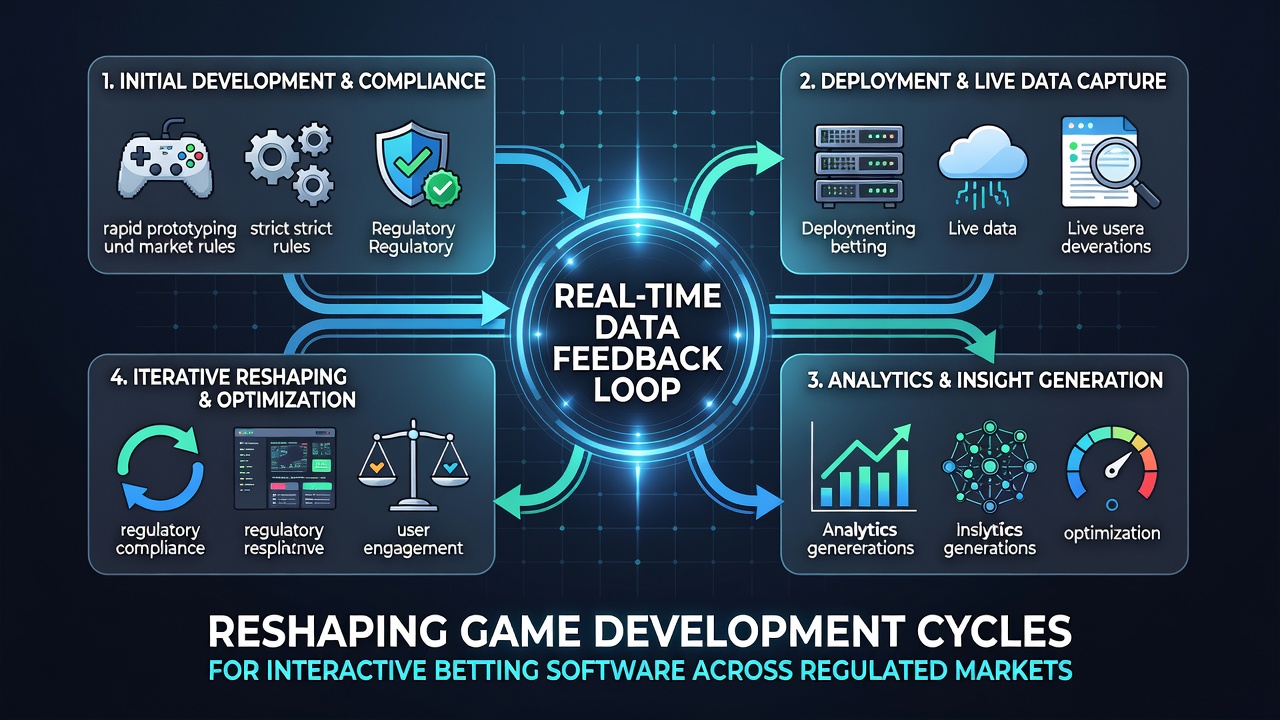
Mapping Real-Time Data Influences on Development Cadences in Regulated Betting Software Markets
Real-time data feedback loops operate by capturing player actions during live sessions, processing those signals through automated analytics engines, and routing the resulting insights directly into design and engineering teams who then adjust mechanics, payout structures, and user interfaces on accelerated timelines. These loops compress traditional development phases that once spanned months into iterative sprints measured in days or weeks, yet every change must still navigate compliance checkpoints established by licensing authorities in each jurisdiction.
Core Mechanics of Feedback Integration
Developers instrument betting platforms to log variables such as session duration, bet frequency, feature activation rates, and churn signals, then feed those streams into machine-learning models that flag underperforming elements within hours of deployment. Teams receive prioritized recommendations, implement targeted revisions, and push updates through staged rollout systems that maintain regulatory audit trails. Observers note that this approach replaces sequential approval gates with parallel review processes where compliance officers review proposed patches alongside live performance data, shortening the interval between initial concept and player-facing release.
Data indicates that studios operating under multiple licenses now maintain separate code branches for each market, allowing region-specific tweaks while sharing core feedback infrastructure. One study from the University of Nevada, Las Vegas Gaming Innovation Lab revealed that platforms using these loops reduced average revision cycles from 47 days to 12 days across tested titles in 2025, with further compression observed in early 2026 deployments.
Regulatory Constraints Shaping Implementation
Licensed operators must submit material changes for pre-approval in markets including New Jersey, Pennsylvania, and several Canadian provinces, which forces development teams to embed compliance validation steps inside the feedback loop itself. Automated systems now generate standardized reports that accompany every proposed update, detailing statistical impact on fairness metrics and responsible gaming indicators. Regulators in these regions have begun accepting continuous monitoring data in lieu of static certification documents for minor balance adjustments, provided the underlying algorithms remain within pre-approved parameters.
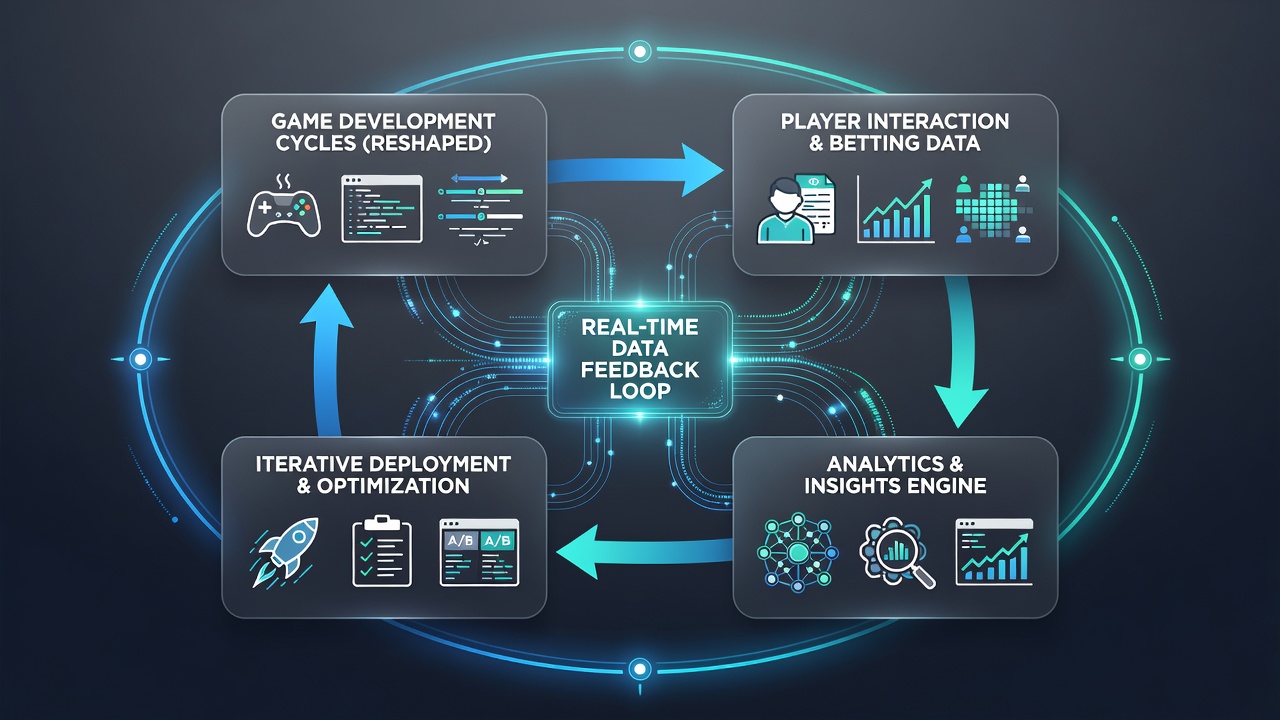
Figures from the New Jersey Division of Gaming Enforcement show that approved software patches incorporating real-time adjustments rose from 312 in the first half of 2025 to 487 during the same period in 2026, reflecting both increased platform activity and streamlined review procedures. Similar patterns appear in reports issued by the Alcohol and Gaming Commission of Ontario, where operators documented faster iteration on player-retention features while maintaining required responsible-gaming thresholds.
Market-Specific Adaptations Observed by July 2026
By July 2026, several European jurisdictions outside the United Kingdom had introduced sandbox environments allowing limited live testing of feedback-driven changes under heightened monitoring. Developers use these sandboxes to validate model predictions against actual player cohorts before full deployment, generating datasets that satisfy both commercial and regulatory requirements. In Australia, state-level authorities have aligned reporting formats so that a single analytics pipeline can service multiple licenses, reducing redundant engineering work while preserving jurisdiction-specific thresholds for volatility and return-to-player calculations.
Case examples include a European studio that integrated heat-mapping of bonus round engagement into its core engine, enabling automatic rebalancing of reel weights within approved variance bands. The system flagged declining interaction rates in one market segment during a July 2026 test window, triggered an automated patch, and restored session metrics within 48 hours while staying inside pre-cleared mathematical boundaries. Regulators received simultaneous notification and post-implementation performance summaries, satisfying audit requirements without halting the update cycle.
Cross-Border Data Architecture Trends
Platforms serving multiple regulated markets increasingly rely on edge-computing nodes that process sensitive player data locally before aggregating anonymized metrics for central analysis. This architecture satisfies data-residency rules while still supplying the volume needed for robust model training. Industry associations such as the European Gaming and Betting Association have published technical guidelines that help studios align these distributed systems with both commercial objectives and oversight obligations across member states.
Research published by the Canadian Centre for Gaming Research in 2026 documented how operators using unified feedback platforms achieved 23 percent higher feature adoption rates after implementing cross-market learnings, provided each jurisdiction retained final control over payout parameters and responsible-gaming triggers. The same report noted that development teams now allocate roughly 35 percent of sprint capacity to compliance documentation generated automatically from the feedback systems themselves.
Conclusion
Real-time data feedback loops have established new rhythms for game creation in regulated betting software environments, replacing lengthy sequential stages with continuous, monitored iteration. Licensing bodies across North America, Europe, and Australia have adapted their oversight frameworks to accommodate these faster cycles while preserving required transparency and fairness standards. The resulting development cadence allows platforms to respond to player behavior within compressed timeframes, yet every adjustment remains traceable through documented regulatory channels that continue to evolve alongside the technology.