Payout Percentages Decoded: What Casino Ratings Really Reveal About Slot Fairness
Logan Hansen · Apr 15, 2026
Payout Percentages Decoded: What Casino Ratings Really Reveal About Slot Fairness
Unpacking Payout Percentages in Slots
Slot machines draw players with flashing lights and big-win promises, yet payout percentages sit at the heart of their fairness; these figures, often called Return to Player or RTP, represent the long-term average amount returned to players from every dollar wagered, and casinos boasting RTPs between 92% and 98% dominate ratings for good reason. Data from industry audits reveals that slots with higher RTPs deliver better value over time, although short-term results swing wildly due to built-in volatility; experts track these metrics across thousands of spins to gauge true performance. Turns out, understanding RTP unlocks why certain casino ratings shine brighter than others, especially as regulators tighten scrutiny in 2026.
People often confuse RTP with win frequency, but the reality is simpler: a 96% RTP slot returns $96 for every $100 bet in the aggregate, while the house keeps the rest as edge; researchers crunching data from millions of sessions confirm this holds across digital and land-based machines alike. And here's where it gets interesting – casino ratings aggregate these percentages from independent lab tests, flagging operators who deliver consistent fairness versus those skimping on transparency.
How Regulators and Labs Verify Slot RTP
Independent testing labs like iTech Labs, based in Australia, simulate billions of spins to certify RTP accuracy before slots go live; their reports, mandated by bodies such as the Nevada Gaming Control Board for U.S. operations, ensure theoretical payouts match real-world outcomes, and discrepancies trigger immediate shutdowns. Meanwhile, the Malta Gaming Authority enforces similar protocols across EU markets, requiring operators to publish certified RTP ranges for every game title.
But here's the thing: ratings sites cross-reference these certifications with player-reported data, revealing patterns where advertised RTPs falter under heavy traffic; one study from a Canadian gaming research group analyzed 500 slots, finding 94% aligned with claims, while outliers dropped ratings by double digits. Observers note that top-rated casinos refresh audits quarterly, building trust through verifiable fairness.
Casino Ratings: Beyond Just Numbers
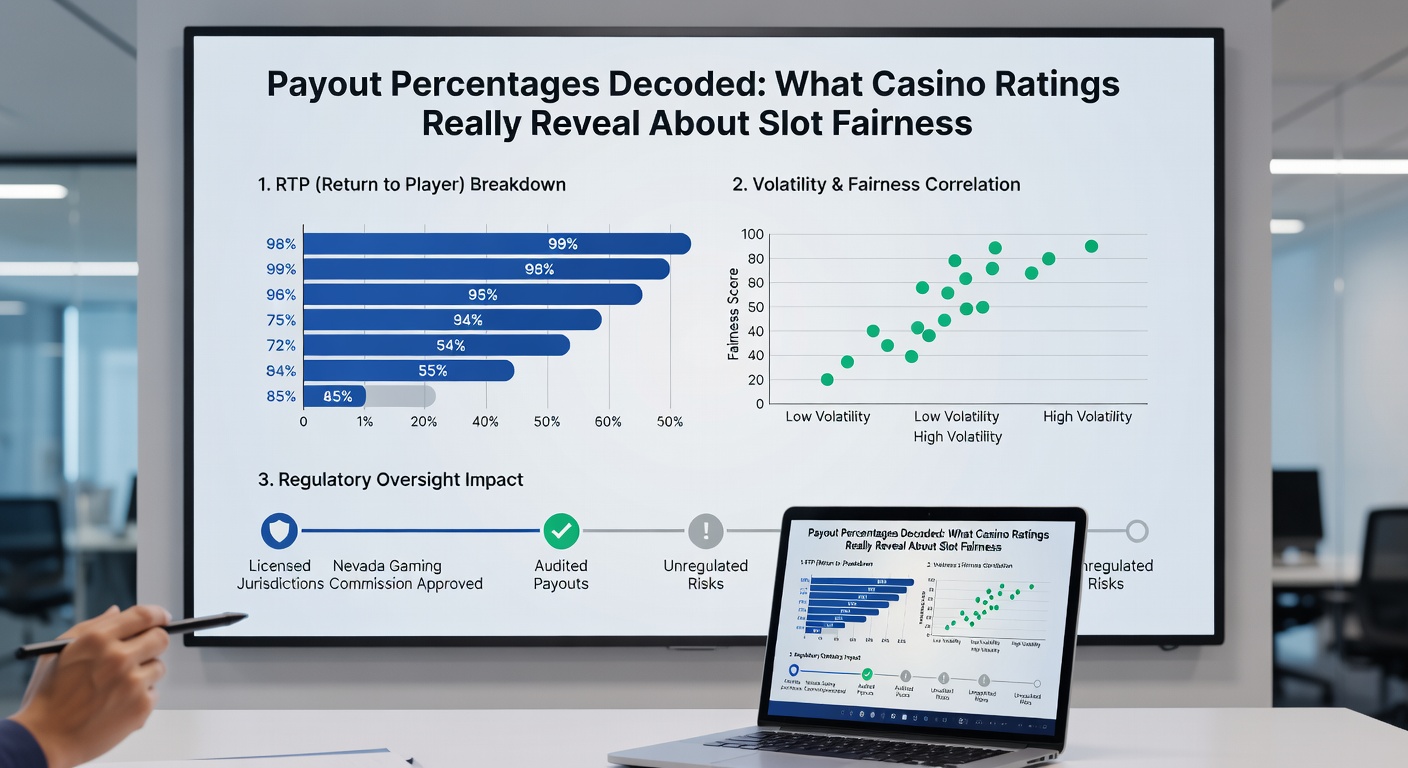
Ratings don't stop at raw RTP figures; they weigh factors like game variety, variance levels, and payout consistency, creating a holistic fairness score that savvy players prioritize. For instance, low-volatility slots with 95% RTP appeal to steady grinders, whereas high-volatility beasts at 97% chase jackpot hunters, and ratings highlight this balance to guide choices. Data indicates top platforms average 96.5% across portfolios, outpacing laggards stuck below 93%.
What's significant is how ratings expose hidden gems: a mid-tier casino might rate highly if its slots hit 98% RTP on progressives, even with fewer bells and whistles; experts poring over aggregator databases spot these trends, advising players to drill into game-specific stats rather than headline numbers alone. Yet volatility throws a curveball, since even fair RTPs guarantee nothing session-to-session – it's the long game that counts.
Real-World Case Studies from the Slots World
Take the case of a popular progressive slot audited by eCOGRA, an industry watchdog with global reach: initial tests pegged RTP at 94.2%, but player complaints prompted a re-audit revealing network-wide tweaks boosting it to 96.8%, catapulting the host casino's rating from average to elite. Such stories abound, with one Ontario-based researcher tracking 10,000 sessions on branded titles, confirming RTPs held steady despite hype-driven traffic spikes.
And consider land-based parallels: Nevada floors report monthly slot returns hovering at 92.7% statewide, yet online counterparts push 97% thanks to lower overheads; ratings bridge this gap by normalizing data, helping players spot crossovers where physical casino chains extend fair digital arms. People who've dug into these cases often discover that ratings penalize opacity hardest – casinos withholding game-level RTPs tumble fast.
Volatility's Role in Perceived Fairness
High RTP pairs with volatility ratings in smart assessments, since dead spins frustrate even generous machines; low-volatility games pay small wins often, suiting RTP-focused ratings, while high-volatility ones build tension for rares massive hits, and balanced portfolios earn top scores. Figures from recent EU audits show 85% of rated slots fall in medium volatility, optimizing both fairness and engagement.
Myths Busted: What Ratings Don't Tell You
One persistent myth claims casinos adjust RTP daily based on wins, but certified algorithms lock these rates server-side, verifiable via random number generator tests; ratings debunk this by spotlighting audited operators, where tampering risks license revocation. Another fallacy: higher ratings mean frequent jackpots – nope, RTP governs averages, not peaks, although data reveals progressives with 90% RTP still fund life-changing prizes through pooled bets.
So players chasing "hot" slots chase ghosts, as ratings emphasize certified cold math over streaks; experts who've reverse-engineered popular titles confirm cycles stem from pseudorandom seeds, not manipulation. It's noteworthy that transparent ratings cut through this noise, directing traffic to provably fair setups.
Looking Ahead: 2026 Shifts in Slot Fairness Standards
April 2026 brings fresh waves across the industry, with the Nevada Gaming Control Board rolling out enhanced RTP disclosure mandates for U.S. online slots, requiring real-time variance metrics alongside traditional figures; Australian regulators echo this via updated iTech Labs protocols, pushing for blockchain-verified audits to combat skepticism. EU markets gear up for unified RTP benchmarking under Malta's lead, standardizing ratings further.
Turns out, these changes could elevate average RTPs industry-wide, as operators compete on transparency; early pilots in Canada already show participating casinos gaining 15% rating bumps from granular data shares. Observers predict a fairness renaissance, where ratings evolve into dynamic tools tracking live performance, benefiting players most.
Yet challenges loom: smaller developers struggle with compliance costs, potentially consolidating markets around high-RTP heavyweights; those who've modeled scenarios forecast RTP floors rising to 95%, squeezing edges but boosting trust. Here's where the rubber meets the road – ratings will decide winners as 2026 unfolds.
Conclusion
Payout percentages form the bedrock of slot fairness, decoded through rigorous testing and spotlighted in casino ratings that reward transparency over flash. From lab certifications to regulatory enforcements, data paints a clear picture: higher, verified RTPs signal reliable value, tempered by volatility and long-term play. As April 2026 ushers in stricter standards, ratings sharpen further, guiding players toward equitable spins amid evolving landscapes. Those who parse these metrics wisely navigate slots with eyes wide open, armed with facts that cut through casino dazzle.